


Amid the ongoing debate about meat, many people seek protein sources that are just as satisfying, nutritionally robust, and versatile. Enter tempeh—a fermented powerhouse that ticks all the boxes and then some. Not only is it rich in complete protein, often surpassing eggs in protein content, but it’s also a natural probiotic, supporting gut health and boosting immunity. Tempeh’s amino acids promote healthy skin and hair, making it a nutritional superstar beyond mere protein.
Yet despite its growing popularity, many still wonder: What exactly is tempeh, where does it come from, and why is it considered a top meat alternative? Here’s everything you need to know about this versatile fermented food, its nutritional profile, and how to incorporate it into your meals.

What Is Tempeh?
Tempeh is a fermented soybean product with a rich, nutty flavor and a firm texture. Similar to miso or natto, it is made by fermenting whole soybeans with the fungus Rhizopus oligosporus, then pressing them into a compact cake, traditionally wrapped in banana leaves.
Originating in Indonesia, tempeh has been a staple for centuries, mentioned as early as 1815 in the Indonesian text Serat Centhini. Today, it’s widely consumed in Java and produced in various forms, sometimes using chickpeas, peas, or fava beans. Often called “high-protein soybean meat,” tempeh is celebrated for its dense nutritional profile and versatility.
Nutritional Value (per 84g serving)
- Calories: 162 kcal
- Protein: 15 g
- Carbohydrates: 9 g
- Fat: 9 g
- Sodium: 9 mg
- Iron: 12% RDA
- Calcium: 9% RDA
- Riboflavin: 18% RDA
- Niacin: 12% RDA
- Magnesium: 18% RDA
- Phosphorus: 21% RDA
- Manganese: 54% RDA
Benefits of Tempeh
Like other fermented foods, tempeh is rich in probiotics, supporting a healthy gut microbiome. It contains prebiotics that promote short-chain fatty acid production, helping reduce inflammation. Tempeh is also a plant-based calcium source, supporting bone health and helping prevent osteoporosis.
Its high protein content (about 20g per 100g) aids satiety and appetite control, while soy isoflavones help lower LDL cholesterol and offer antioxidant benefits. Combined with amino acids that promote collagen synthesis, minerals like iron, zinc, and phosphorus, and gut-supporting probiotics, tempeh is particularly beneficial for skin and hair health.
Note: Tempeh is unsuitable for those with soy allergies or intolerances.
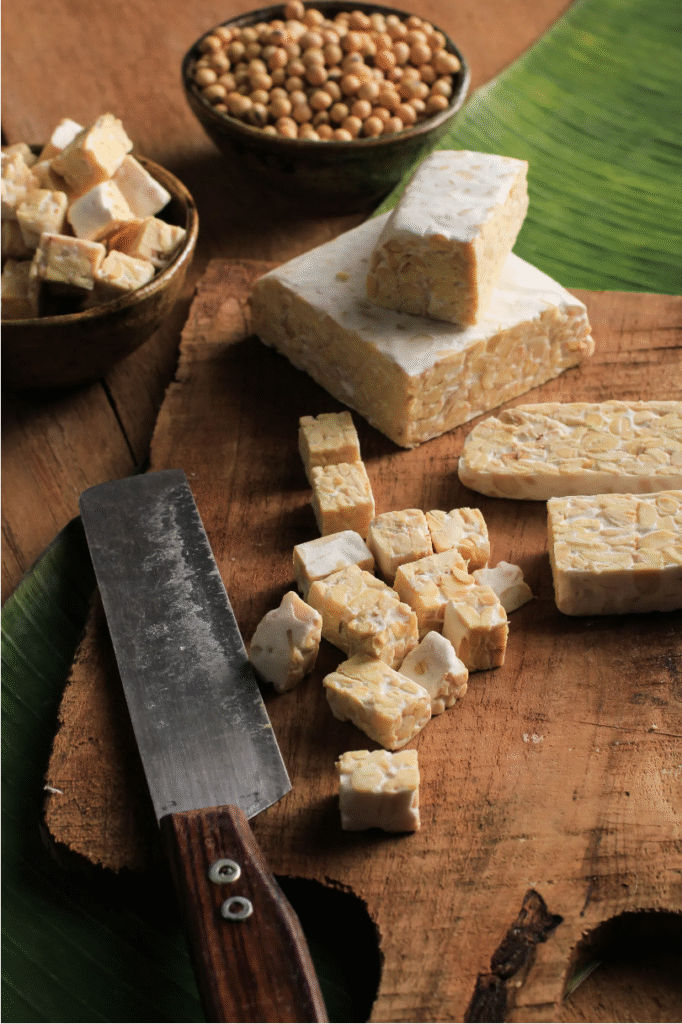
Tempeh vs. Tofu: What’s the Difference?
| Aspect | Tofu | Tempeh |
|---|---|---|
| Texture & Flavor | Soft, mild, versatile | Firm, chewy, nutty, flavorful |
| Production | Coagulated soy milk | Fermented whole soybeans |
| Nutritional Profile | High protein, low fiber | Higher protein, fiber, and probiotics |
Summary: Tempeh offers superior nutrition, but tofu’s mild flavor makes it easier to incorporate into a variety of dishes. Choice depends on taste preference and dietary goals.
How to Make Tempeh at Home (Approx. 500g)
Ingredients:
- 250g soybeans
- 1 tsp tempeh starter
- 2 tbsp apple cider vinegar
Instructions:
- Soak soybeans for 12 hours.
- Remove skins and boil for ~30 minutes, keeping some texture.
- Drain thoroughly and mix with apple cider vinegar and starter.
- Place beans in a plastic bag, press into a flat block, and poke holes for airflow.
- Ferment at 28–32°C for 24–36 hours until white mycelium forms.
- Refrigerate and consume within 5 days.
Cooking with Tempeh
If making your own tempeh feels daunting, buy fresh, unpasteurized tempeh to preserve its nutrients. Its firm texture makes it ideal for marinades, steaming, baking, frying, or sautéing.
Serving Ideas:
- Salads: Marinate in soy sauce, lemon juice, and black pepper; sauté lightly with coconut oil; slice into strips.
- Soups: Dice and sauté tempeh, then add to soups like croutons for extra protein.
- Sandwiches: Roast sliced tempeh at 200°C until golden and crisp; top with sesame seeds, avocado, and tomato.
- Pasta or Risotto: Pan-fry thick slices, crumble over pasta or risotto as a cheesy alternative.
- Egg Dishes: Add crumbled tempeh to scrambled eggs or omelets for a protein boost.
- Snacks: Slice into strips, pan-fry or bake until crispy; serve with hummus or guacamole.
Bottom line: Tempeh is more than a meat substitute. With its high protein, probiotics, fiber, and heart-healthy compounds, it supports gut, bone, skin, and hair health, making it a nutrient-dense addition to any diet. Whether you sauté, bake, or crumble it into your favorite dishes, tempeh proves that plant-based eating can be delicious, satisfying, and supremely nourishing.